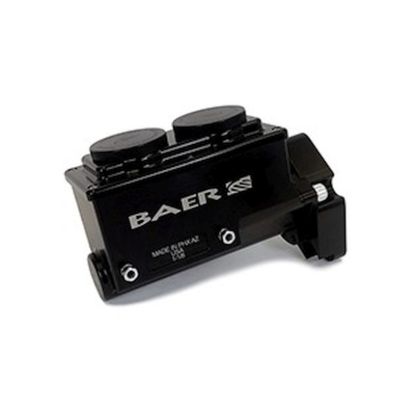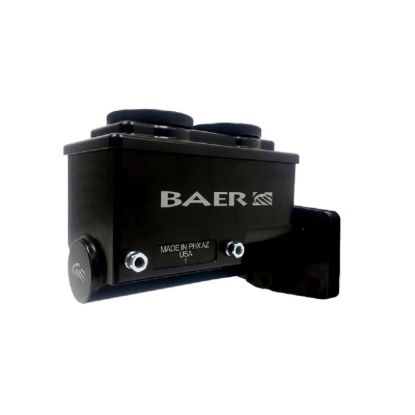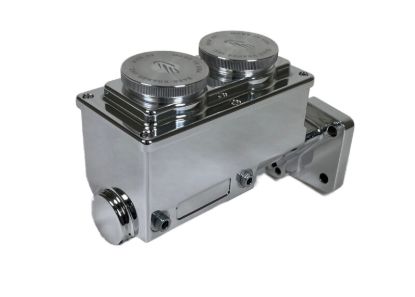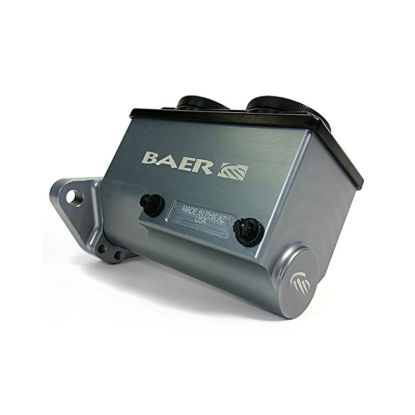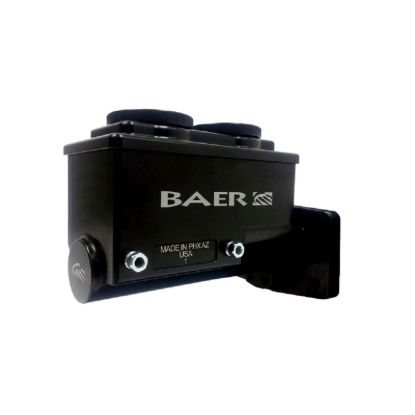

ReMaster 1 Right Port Pol 4Bolt
bae6801302RP
Baer Brakes Mopar 1in Bore Remaster 4-Bolt Right Port Master Cylinder Assembly - Polished
607,26 € excl. VAT
Does your brake pedal feel soft, long or unnecessarily heavy? The master cylinder converts your pedal force into hydraulic pressure, while the brake booster reduces the force you need to apply. This category brings together master cylinders, rebuild kits, master cylinder stoppers and reservoir caps for when you want to restore or adjust the brake feel in your project.
The most important parameter is the bore diameter. A smaller bore typically gives more pressure per unit of pedal force but longer pedal travel, while a larger bore gives a shorter, firmer pedal that requires more force. The right choice depends on the total piston area in the calipers, the pedal ratio and whether a brake booster is fitted. Also check the thread on the fittings, the reservoir position and the space in the engine bay before choosing from our master cylinders. If you are changing calipers at the same time, choose the master cylinder based on the new setup in brake systems.
The brake booster typically uses vacuum from the engine to reduce pedal force. If the engine has low vacuum, e.g. due to an aggressive camshaft or because it is a diesel engine, one of our vacuum pumps can ensure the booster gets enough vacuum. On some cars, the firewall between the engine bay and the cabin can flex under hard braking, making the pedal feel less direct. A master cylinder stopper, e.g. from Cusco, braces the master cylinder against the firewall and can give a firmer pedal. Other brands in the category include Baer Brakes, Wehrli, DFC and Brembo Powersports.
If the master cylinder leaks, or the pedal slowly sinks under constant pressure, worn seals may be the cause. A master cylinder rebuild kit typically replaces seals and piston cups, but the bore must be free of rust and scoring, otherwise the rebuild will not last. A soft pedal can also be caused by air in the system or boiling brake fluid after hard driving – that is not a fault in the cylinder itself. After installation, the system must be bled thoroughly, and the brake fluid should be changed according to the manufacturer's recommendation, because it absorbs moisture. Whether the modification is road legal depends on the product and the car, so check the approval for the specific part number.
It depends on the piston area in the calipers, the pedal ratio and whether there is a brake booster. A smaller bore typically gives a lighter pedal with longer travel, a larger bore a shorter and heavier pedal.
Often yes, if the bore is smooth and free of rust or scoring. A rebuild kit typically replaces the seals and rubber parts. If the bore is damaged, a new master cylinder is normally the safe solution.
Typically there is still air in the system, so it must be bled thoroughly, preferably by bench bleeding the cylinder before installation. An incorrect bore diameter can also cause longer pedal travel.
It depends on the product and the car. Check the approval for the specific part number, and be aware that modifications to the brake system may require documentation at inspection.