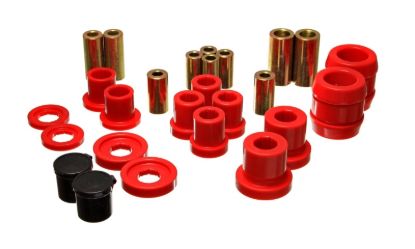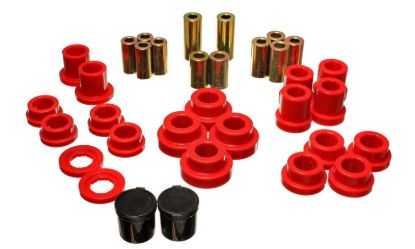

CntrlArmBshngKt - 11.3106R
eng11.3106R
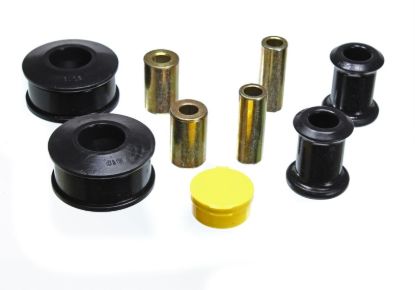
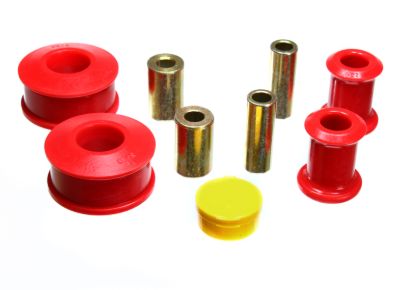
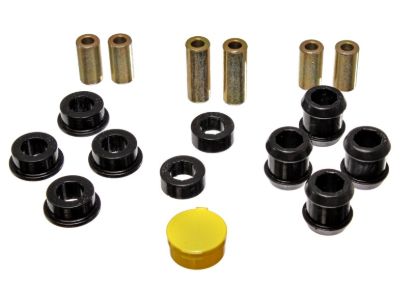
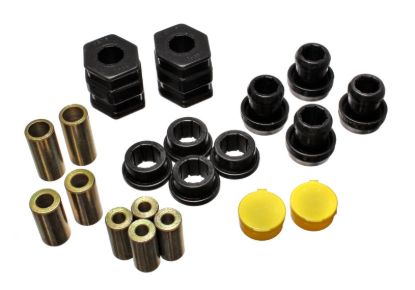
Energy Suspension 90-97 Mazda Miata Red Rear Control Arm Bushing Set
198,44 € excl. VAT
Does the engine vibrate through the whole cabin, or does the rear end feel loose in fast corners? Worn or soft bushings create movement exactly where you want control. In this category we bring together suspension bushings, engine, transmission and differential mounts, strut top mounts and subframe bushings for daily drivers, trackday cars and projects alike.
Bushings and mounts sit between control arms, subframe, body and drivetrain and determine how much the parts can move relative to each other. OEM rubber parts dampen vibrations but can give under acceleration, braking and cornering, especially when worn. Stiffer bushings and mounts can keep wheel alignment more precise and reduce engine and gearbox rock, but typically transmit more noise and vibration into the cabin.
Brands in this category include Superpro, Prothane, Energy Suspension, Innovative Mounts and Whiteline. Replacing several bushings on the same axle typically gives more consistent behaviour than replacing one at a time. After fitting suspension bushings, the wheel alignment should be checked. Some polyurethane bushings must be greased during installation and can squeak over time, so follow the manufacturer's instructions. If you are also changing dampers or springs from suspension components, it pays to match the parts as a whole.
Rubber typically dampens noise and vibrations best, while polyurethane and other stiffer materials can give more precise steering and less movement. The choice depends on how much comfort you are willing to give up and on the specific product's hardness.
Typical signs are strong vibrations at idle, clunks when pulling away or shifting gears, and visible cracks in the rubber. The symptoms can also have other causes, so inspect the mount before ordering a new one.
It depends on the product and the car. Check for the specific part number whether any requirements apply or documentation is included, and make sure the wheel alignment is correct after fitting.
Some engine mounts can be fitted with ordinary tools, while control arm bushings often require a press. Strut top mounts require a suitable spring compressor. Have the wheel alignment checked afterwards.